For many years, I approached career searching the same way most people do.
I looked at job postings, submitted applications, sent resumes, and waited for someone to contact me.
Eventually, I learned something important:
Hope is not a strategy.
The job market may contain millions of opportunities, but an available position does not automatically become an interview or an offer.
In May 2026, the U.S. Bureau of Labor Statistics reported approximately 7.6 million job openings and 5.2 million hires. Those numbers show that opportunities exist, but they also illustrate the difference between an open position and an actual hiring decision.
After spending years helping organizations market their products and services, I realized I needed to apply the same basic principles to myself.
I needed to stop presenting myself as another applicant and start positioning myself as a professional brand with measurable value.
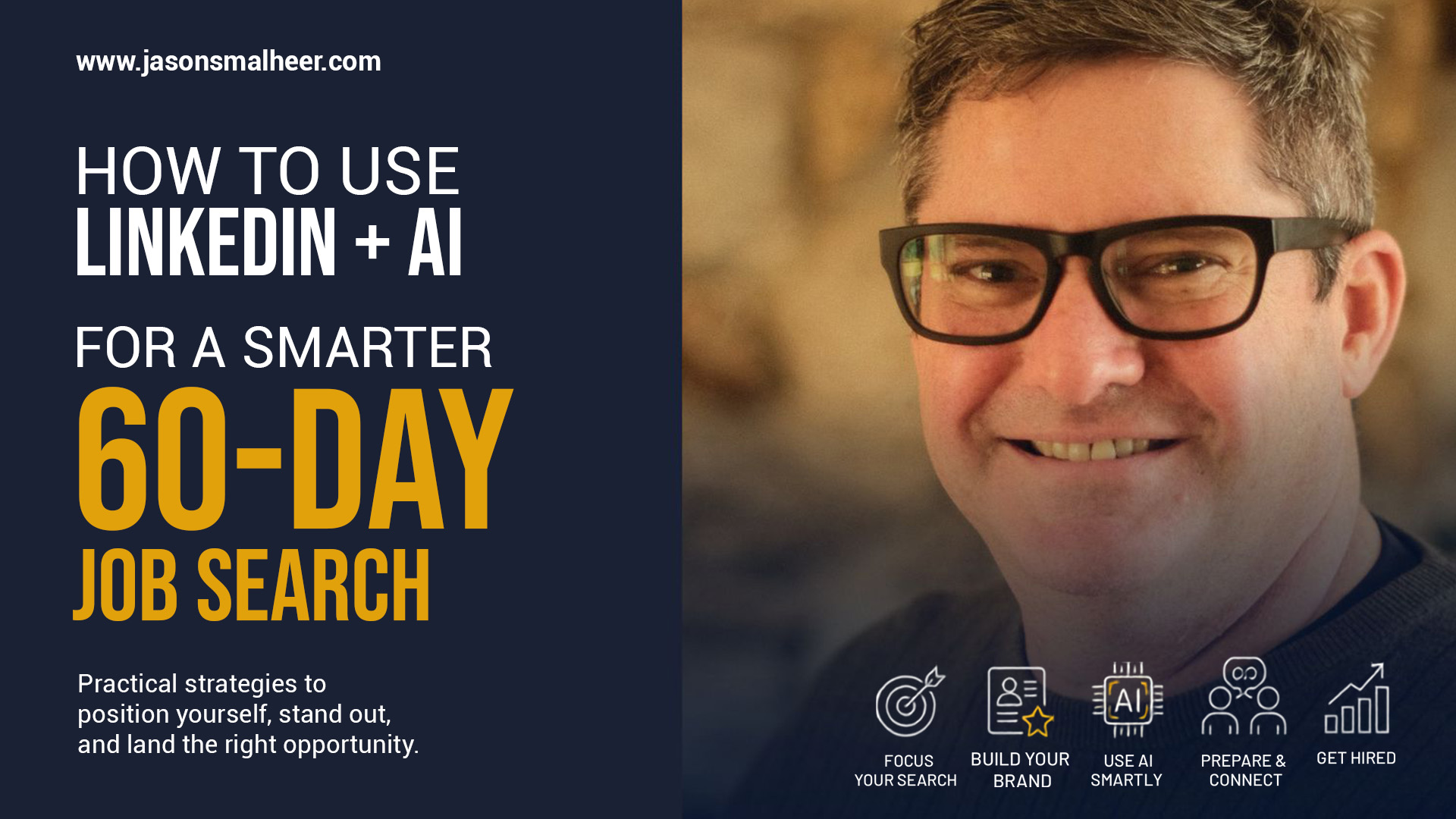
That realization became the foundation of my book, 60 Days to Hired: Unlocking High-Paying Jobs with LinkedIn, AI, and Next-Gen Tools. The book is available through Barnes & Noble in paperback, hardcover, and eBook formats.
Here are several of the most important principles behind my approach.
1. Stop Applying to Every Available Job
One of the most common mistakes job seekers make is assuming that sending more applications will automatically produce better results.
More applications can create more activity.
However, activity is not always the same as progress.
A focused career search begins with clear criteria.
Before submitting another application, ask yourself:
- What type of role am I actually pursuing?
- Which industries match my experience?
- Where am I willing to work?
- What compensation range reflects my skills and experience?
- Which benefits or working arrangements matter most?
- What kind of organization could support my long-term development?
- Could I realistically see myself remaining with this employer?
When you know what you are looking for, you can stop reacting to every job listing and begin pursuing opportunities intentionally.
CareerOneStop, a career resource sponsored by the U.S. Department of Labor, recommends creating a job-search plan, gathering relevant documents, researching employers, networking, using social media, and conducting a targeted job search.
Your goal should not be to apply everywhere.
Your goal should be to identify positions where your experience, skills, and career direction align with a real organizational need.
2. Treat LinkedIn as a Professional Marketing Platform
Your LinkedIn profile is not simply an online copy of your resume.
It is a professional positioning page that can work on your behalf at any hour of the day.
A recruiter may discover your profile before you apply for a position.
A hiring manager may review it after receiving your resume.
A former colleague may use it to decide whether to recommend or introduce you.
Your profile should quickly explain:
- Who you are
- What you do
- Which problems you solve
- What skills you possess
- What results you have produced
- What type of opportunity you are pursuing
LinkedIn’s Economic Graph reported that the skills needed for a given position had changed by approximately 25 percent since 2015. LinkedIn also recommends that workers develop relevant skills, keep those skills current, and highlight them on both their LinkedIn profiles and resumes.
That makes the language you use on your profile especially important.
Your Headline
Do not rely only on your current job title.
Your headline should communicate your area of expertise and the value you can bring to an organization.
Instead of writing:
Marketing Director
You could write:
Marketing Leader Helping Organizations Build Revenue, Strengthen Brands, and Develop High-Performing Teams
The second version gives people a clearer reason to continue reading.
Your About Section
Your About section should tell a concise professional story.
Explain:
- What you have done
- What you do well
- What you have accomplished
- Which challenges you are equipped to address
- How your background could help an organization
Avoid filling the section with generic phrases such as:
- Hardworking
- Dedicated
- Team player
- Excellent communicator
- Results-oriented
Those qualities are expected.
Employers need evidence that demonstrates what separates you from other candidates.
Your Experience Section
Do not simply copy your previous job descriptions.
A job description explains what you were expected to do.
Your experience section should explain what you actually accomplished.
3. Use AI as a Writing Partner
Artificial intelligence can make a career search more organized and efficient, but it should not replace your judgment, voice, or experience.
I encourage job seekers to think of AI as a writing partner.
It can help you:
- Review job descriptions
- Identify recurring keywords
- Compare a role with your experience
- Improve your LinkedIn headline
- Draft a professional summary
- Develop a starting point for a cover letter
- Generate possible interview questions
- Organize career achievements
- Identify areas that require more research
For example, you can provide an AI tool with a job description and your resume, then ask it to identify the areas where your verified experience most closely matches the employer’s needs.
That information can help you prepare a more relevant application.
However, the final work must still belong to you.
Always review AI-generated content carefully.
Check every:
- Job title
- Employment date
- Number
- Certification
- Achievement
- Skill
- Professional claim
Remove anything that is inaccurate.
Replace generic wording with real examples.
Make sure the final content sounds like you.
AI can help you organize and improve your work, but you remain responsible for the truth and quality of the final result.
4. Replace Responsibilities With Results
Many resumes explain what a person was responsible for.
Stronger resumes explain what changed because that person was there.
Consider these two examples.
Responsibility-Based Statement
Managed regional client accounts.
Results-Based Statement
Retained 94 percent of regional client accounts while expanding annual revenue across the territory.
The second statement is more specific.
It gives the reader context, scale, and evidence.
Depending on your profession, useful measurements may include:
- Revenue generated
- Costs reduced
- Customers served
- Accounts retained
- Projects completed
- Enrollment increased
- Production accelerated
- Errors reduced
- Employees trained
- Deadlines achieved
- Campaign performance improved
- Customer satisfaction increased
Do not invent numbers.
Use accurate information that you can explain confidently during an interview.
If you are not currently tracking your achievements, start now.
Keep a record of your:
- Projects
- Promotions
- Awards
- New responsibilities
- Sales results
- Performance improvements
- Certifications
- Speaking engagements
- Leadership contributions
Your future resume and LinkedIn profile will be stronger because of it.
5. Identify What Makes You Different
You may be competing with people who have similar job titles, degrees, or years of experience.
That does not mean you are all offering the same value.
Your task is to identify your unique selling propositions.
These are the specific qualities, experiences, and accomplishments that distinguish you from other applicants.
Your unique selling propositions may include:
- Speaking multiple languages
- Leading a successful turnaround
- Increasing revenue
- Developing a new process
- Managing a large or complex team
- Holding specialized certifications
- Building a department
- Reducing operating costs
- Entering a new market
- Improving customer retention
- Teaching or mentoring others
- Combining experience from several industries
Choose the three to five strengths that best represent your professional value.
Then make sure those strengths appear consistently throughout your:
- Resume
- LinkedIn profile
- Cover letters
- Interview responses
- Professional biography
- Portfolio
This consistency helps people understand what you are known for.
That is the beginning of a strong personal brand.
6. Position Yourself as the Solution
A hiring manager is not simply searching for a person with the correct title.
The company has a problem to solve.
The organization may need to:
- Increase revenue
- Improve employee retention
- Develop a team
- Enter a new market
- Reduce inefficiency
- Strengthen customer service
- Improve operations
- Launch a product
- Repair a struggling department
Your application should help the employer connect your experience to that problem.
Instead of saying:
I have 15 years of management experience.
Explain what that experience allows you to do.
For example:
During 15 years in management, I developed sales teams, introduced measurable performance systems, improved accountability, and helped departments reach revenue goals.
The second statement gives the employer a reason to care.
Your experience becomes more valuable when it is connected to the organization’s needs.
7. Prepare Interview Stories Before the Interview
A strong resume may help you secure an interview.
The interview is where you must explain your value clearly.
Candidates often struggle because they provide too little information or give answers that are far too long.
The STAR method can help.
STAR stands for:
Situation
What was happening?
Task
What responsibility or challenge did you face?
Action
What did you personally do?
Result
What happened because of your action?
MIT Career Advising and Professional Development describes STAR as an effective formula for structuring responses to behavioral interview questions. MIT also recommends focusing most of the response on the actions the candidate personally took.
Before your next interview, prepare examples involving:
- Leadership
- Conflict resolution
- Problem-solving
- Customer service
- Team development
- Adaptability
- Revenue growth
- Cost reduction
- Project management
- Decision-making
- Working under pressure
- Learning from failure
Practice speaking through each example.
Do not memorize every sentence.
Know the facts, the sequence, the action you took, and the result.
Your answers should sound prepared, not rehearsed.
8. Research the Company and the Interviewer
Preparation should go beyond reviewing your own resume.
Before an interview, learn as much as you reasonably can about:
- The company
- The role
- The industry
- The local market
- The department
- The interviewer
- The organization’s recent priorities
MIT’s career guidance recommends researching the target company or organization, practicing interview skills, and planning ahead before the interview.
Review the interviewer’s LinkedIn profile when that information is publicly available.
Look for professional information that can help you understand their:
- Career background
- Current responsibilities
- Industry experience
- Professional interests
- Time with the organization
You may discover a shared professional interest or career experience that helps create a natural conversation.
The objective is not to become overly personal.
The objective is to demonstrate that you took the opportunity seriously enough to prepare.
9. Ask Better Questions
At some point during almost every interview, you will hear:
Do you have any questions for us?
Your answer should not be no.
Thoughtful questions show that you are evaluating the organization just as carefully as it is evaluating you.
Consider asking:
- What would success look like during the first 90 days?
- What is the most important challenge this person will need to address?
- How does the team currently measure performance?
- Why is the position available?
- What qualities have helped people succeed in this department?
- What changes do you expect in the role during the next year?
- How does the company support professional development?
- What would you want the selected candidate to improve first?
Avoid asking questions that can be answered by reading the company’s homepage.
Use the opportunity to gather information that will help you determine whether the position and organization are right for you.
10. Network With Purpose
Networking is not about collecting the largest possible number of connections.
It is about building professional relationships over time.
CareerOneStop explains that a professional network can include former teachers, classmates, mentors, colleagues, managers, community contacts, and others who may have useful information or connections. Its guidance also recommends keeping messages short and specific, listening during conversations, taking notes, thanking people for their time, and following up appropriately.
You can begin by:
- Following people in your industry
- Joining relevant professional groups
- Commenting thoughtfully on useful posts
- Reconnecting with former colleagues
- Sharing helpful information
- Asking informed questions
- Thanking people who provide guidance
- Staying connected after interviews
Do not begin every conversation by asking someone for a job.
Contribute first.
Show genuine interest in the field.
Demonstrate that you understand the industry.
The strongest professional relationships are often built before you urgently need assistance.
11. Protect Yourself From Job Scams
Online job searching also requires caution.
Scammers advertise fake opportunities through job sites, social media, email, text messages, and other channels.
The Federal Trade Commission advises job seekers to be cautious when someone asks them to pay for a job, sends a check and requests money back, or pressures them to provide sensitive information. The FTC also explains that honest placement firms typically receive payment from the hiring company rather than charging the candidate an advance fee.
Before responding to an unfamiliar opportunity:
- Research the company independently
- Verify the recruiter’s identity
- Review the company’s official website
- Confirm that the role is genuinely available
- Avoid sending money
- Do not deposit suspicious checks
- Protect sensitive personal information
- Be cautious with unsolicited offers promising unusually high income
A legitimate employer should be willing to provide clear information about the organization, the role, and the hiring process.
12. Track Your Career Search
A career search becomes difficult to manage when applications, emails, interviews, calls, and follow-ups are scattered across several places.
Use a spreadsheet, journal, whiteboard, or project-management tool.
Track:
- Company name
- Job title
- Location
- Compensation range
- Application date
- Recruiter name
- Hiring manager
- Interview dates
- Follow-up dates
- Current status
- Final outcome
Create a folder for each serious opportunity.
Save copies of:
- The job description
- Your tailored resume
- Your cover letter
- Recruiter emails
- Interview notes
- Company research
- Offer information
CareerOneStop’s job-search framework similarly organizes the process into planning, document preparation, employer research, networking, targeted searching, applications, interviews, and salary negotiation.
Organization reduces confusion.
It also helps you follow up professionally and avoid applying to the same opportunity more than once.
13. Follow a Structured 60-Day Plan
The purpose of a 60-day career-search framework is not to promise that every person will receive an offer on a specific date.
No author, recruiter, coach, or marketing system can control an employer’s final decision.
The value of the framework is structure.
A defined plan helps you maintain focus, measure activity, evaluate responses, and improve your approach.
Days 1 to 10: Define Your Target
Identify:
- Preferred roles
- Target industries
- Acceptable locations
- Compensation expectations
- Required benefits
- Career priorities
Create a detailed inventory of your skills and accomplishments.
Days 11 to 20: Build Your Professional Foundation
Update your:
- Resume
- LinkedIn profile
- Professional headline
- About section
- Portfolio
- Professional biography
Make sure each element communicates the same professional direction.
Days 21 to 35: Begin Targeted Outreach
Apply selectively.
Build professional connections.
Contact relevant recruiters.
Participate in industry conversations.
Track every application and interaction.
Days 36 to 50: Strengthen Interview Preparation
Research employers.
Prepare STAR stories.
Practice answering difficult questions.
Develop thoughtful questions for interviewers.
Review your salary and benefit priorities.
Days 51 to 60: Review and Refine
Examine what is working.
Ask:
- Which applications generated responses?
- Which roles produced the strongest conversations?
- Where did the process slow down?
- Does the resume need improvement?
- Is the target too broad?
- Are the right people seeing the profile?
- Are interview answers specific enough?
- Does my positioning clearly communicate my value?
Then adjust the strategy.
A successful career search requires consistency, organization, honest evaluation, and flexibility.
Build a Career Search You Can Control
Modern job seekers have access to more information, technology, and professional connections than previous generations.
That access can create opportunities.
It can also become overwhelming.
The answer is not always to do more.
The answer is to act with greater intention.
Know what you want.
Communicate your value clearly.
Use LinkedIn strategically.
Use AI responsibly.
Prepare before every interview.
Track your progress.
Build professional relationships.
Present evidence instead of generic claims.
That is the philosophy behind 60 Days to Hired.
I wrote the book to help readers move away from hope-based job searching and toward a structured process built around preparation, positioning, and action.
You cannot control every hiring decision.
You can control how prepared, visible, focused, and professional you are throughout the process.
That is where your next opportunity begins.
About the Book
60 Days to Hired: Unlocking High-Paying Jobs with LinkedIn, AI, and Next-Gen Tools is a practical career guide by Jason A. Smallheer.
The book presents a structured approach to:
- Building a stronger LinkedIn presence
- Improving resumes and cover letters
- Using AI as a career-search assistant
- Identifying professional value
- Preparing for interviews
- Working with recruiters
- Evaluating compensation
- Building a personal brand
- Pursuing career opportunities more intentionally
Barnes & Noble currently lists the book in paperback, hardcover, and eBook formats.
Order the book through Barnes & Noble:
60 Days to Hired by Jason A. Smallheer
Frequently Asked Questions
Can AI help me with a job search?
Yes. AI can help analyze job descriptions, organize verified experience, improve application materials, and generate interview-practice questions.
Every output should still be reviewed, corrected, and personalized before use.
Why is LinkedIn important for job seekers?
LinkedIn gives professionals a searchable place to present their skills, experience, achievements, and career direction.
LinkedIn’s skills-first guidance specifically recommends highlighting relevant skills on both LinkedIn profiles and resumes.
What is the STAR interview method?
STAR stands for Situation, Task, Action, and Result.
It is a framework for answering experience-based interview questions with a clear example, personal action, and outcome.
Does 60 Days to Hired guarantee employment within 60 days?
The 60-day framework provides structure, practical actions, and direction for improving a career search.
Individual outcomes depend on many factors, including the candidate’s experience, target market, qualifications, preparation, available opportunities, employer requirements, and hiring decisions.
Sources and Further Reading
1. U.S. Bureau of Labor Statistics
Job Openings and Labor Turnover Summary, May 2026
The report provides current figures for job openings, hires, quits, layoffs, and total separations in the United States. [READ]
2. Barnes & Noble
60 Days to Hired: Unlocking High-Paying Jobs with LinkedIn, AI, and Next-Gen Tools
The official retail listing confirms the title, author, overview, and available formats. [READ]
3. CareerOneStop, Sponsored by the U.S. Department of Labor
Job Search Resources
CareerOneStop outlines a structured process that includes job-search planning, document preparation, employer research, networking, targeted applications, interviews, and compensation negotiation. [READ]
4. LinkedIn Economic Graph
Skills First: Reimagining the Labor Market and Breaking Down Barriers
LinkedIn’s report discusses changing workplace skills, skills-first hiring, and the importance of showcasing relevant skills on LinkedIn profiles and resumes. [READ]
5. MIT Career Advising and Professional Development
Using the STAR Method for Your Next Behavioral Interview
MIT explains how to structure interview responses using Situation, Task, Action, and Result. [READ]
6. MIT Career Advising and Professional Development
Interviewing Resources
MIT recommends researching the organization, refining interview skills, and preparing before the interview. [READ]
7. CareerOneStop, Sponsored by the U.S. Department of Labor
How to Network
The resource provides practical guidance on identifying professional contacts, requesting information, conducting conversations, and following up. [READ]
8. Federal Trade Commission
Job Scams
The FTC explains common warning signs, including requests for advance payments, fake checks, misleading placement services, and attempts to obtain personal information. [READ]