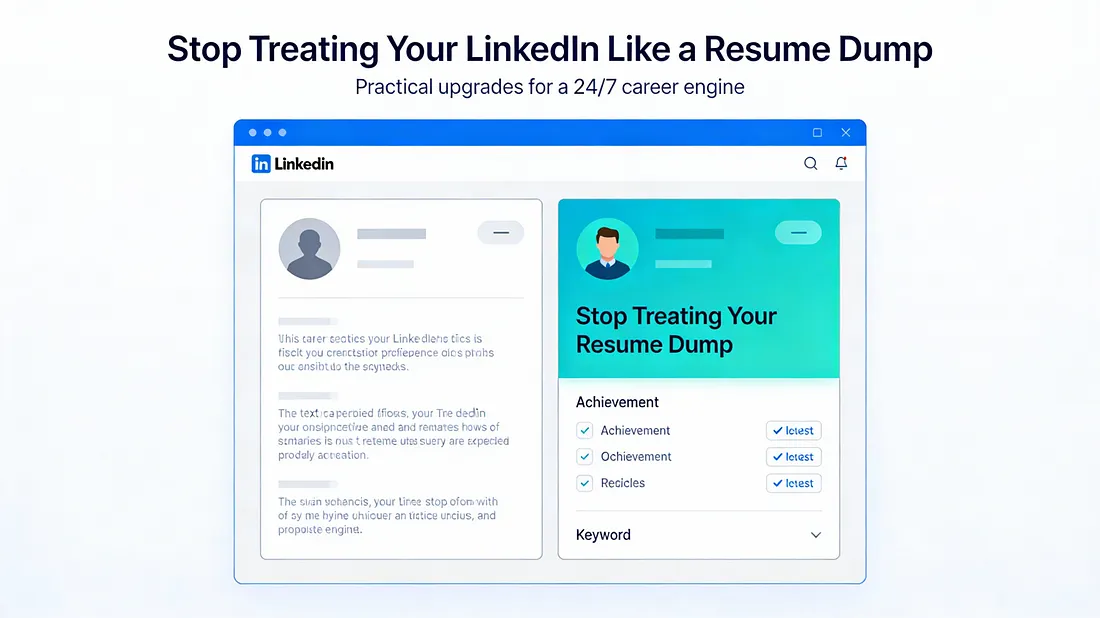
8 simple upgrades to transform your profile from “online resume” to “opportunity magnet
Many people upload their resume to LinkedIn and then forget about it, hoping someone will contact them. But this won’t help you attract recruiters or land interviews.
LinkedIn is more than an online resume. It’s your personal sales page and digital storefront, open all the time. Use these steps to turn your profile into a real career tool instead of a static page.
1. Your Profile Is Not a Resume Dump
Recruiters already see plenty of resumes. On LinkedIn, they want to learn your story.
Your profile should answer key questions: Who are you? What problems do you solve? Why should someone care? Every line should serve a purpose, such as getting attention, building interest, or establishing credibility. If a sentence is copied directly from your resume, consider rewriting or removing it.
2. Treat It as a Living Resume
Update your LinkedIn whenever your career changes.
Add your latest achievements, such as new projects, major deals, or promotions. Don’t wait for the perfect moment. Try updating one section at a time. Edit your headline, highlight your results, and update old job descriptions. Small, regular changes help you stay visible and aligned with your goals.
3. Fix Your Digital Handshake
Your headshot is your first impression. And yes, it matters.
Avoid party photos, vacation pictures, and pet photos. A dark, blurry, or casual photo can make recruiters think you’re not serious. Use a clear, well-lit headshot, framed from your shoulders up, to show you’re professional and ready.
You don’t need to hire a professional photographer. Stand near a window, choose a plain background, dress as you would for a video interview, and ask a friend to help or use your phone’s timer. Keep it simple and purposeful, not fancy.
4. Make Your Headline Work Harder
LinkedIn gives you 220 characters for your headline, so use them wisely. Avoid using only job titles like “Project Manager,” “Team Lead,” or “Sales Associate.”
Recruiters search for skills, industries, and results, not just job titles. Use your headline to clearly show your value, not just your role.
Try this structure:
What you do + Who you help + Proof of value